
BLOG
Home / Blog
Uterine Prolapse – The Questions Women Commonly Google

DR ALPHY S PUTHIYIDOM 19 September 2024
One of the most common things I hear in my clinic is:
“Doctor, I searched online and got scared… is something really wrong?”
If you are here because you Googled symptoms like heaviness, bulge, or urine leakage, I want you to know — you are not alone, and this is very treatable.
Pelvic organ prolapse, especially uterine prolapse, is something many women experience but very few openly talk about. Let me walk you through the most searched questions in a simple, friendly, and reassuring way — just like I explain to my patients in consultation.
What is Uterine Prolapse?
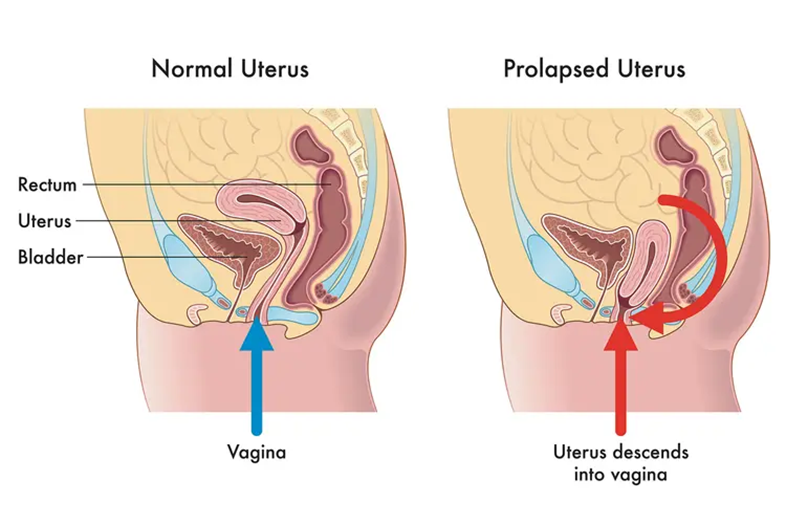
Uterine prolapse happens when the uterus (womb) slips down from its usual position into the vaginal canal.
I usually explain it like this to my patients:
“The pelvic floor muscles are like a hammock holding the organs. When this hammock becomes weak, the uterus starts to descend.”
You might notice:
- A feeling of heaviness or dragging sensation
- Something bulging down vaginally
- Backache
- Urinary leakage or difficulty passing urine
- Discomfort during intimacy
Will Uterine Prolapse Go Away on Its Own?
In most cases, it does not completely go away by itself.
However, in very mild stages, symptoms can improve with:
- Pelvic floor (Kegel) exercises
- Weight control
- Avoiding heavy lifting
- Treating chronic cough or constipation
When prolapse is moderate or severe, we usually need medical support — but this does not always mean surgery. Many women improve beautifully with non-surgical options.
Can Uterine Prolapse Cause Infection?
Yes, it can increase the risk of:
Urinary tract infections
Vaginal infections
Irritation or ulceration if prolapse is advanced
This usually happens when bladder emptying becomes incomplete or hygiene becomes difficult. The reassuring part is — once we correct the underlying prolapse, these infections reduce significantly.
What Causes Uterine Prolapse in Women?
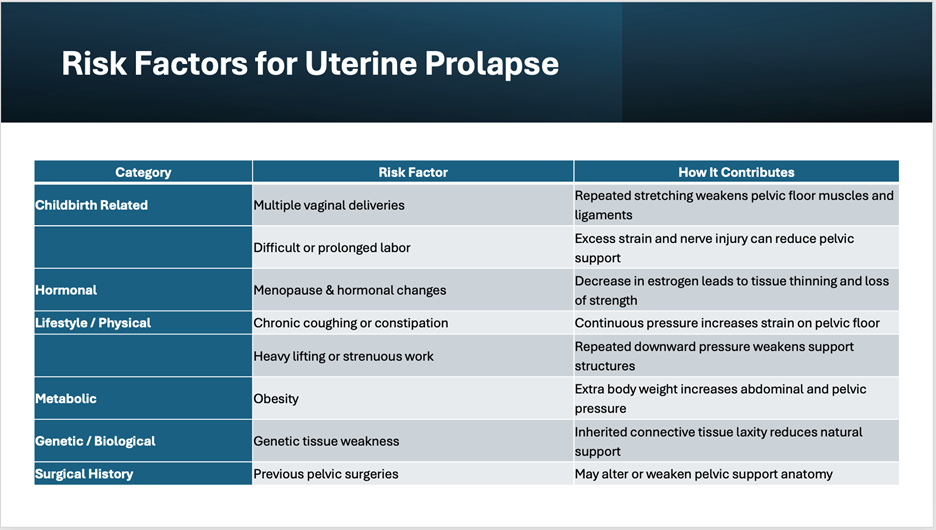
In my clinical experience, it is rarely just one reason. It is usually a combination of:
- Multiple vaginal deliveries
- Difficult or prolonged labor
- Menopause and hormonal changes
- Chronic coughing or constipation
- Heavy lifting or strenuous physical work
- Obesity
- Genetic tissue weakness
- Previous pelvic surgeries
Are Uterine Prolapse Common?
Very common — but under-reported.
Many women think this is a “normal aging change” or “post-delivery issue” and silently live with discomfort. I always tell my patients:
“Common does not mean you have to tolerate it.”
Why Does Uterine Prolapse Happen?
Over time, due to childbirth strain, aging, or hormonal decline, pelvic tissues lose elasticity. Gravity and daily pressure then gradually push organs downward. It is a mechanical support issue, not a disease.
Uterine Prolapse vs Bladder Prolapse – What’s the Difference?
Both fall under Pelvic Organ Prolapse, but involve different organs.
Uterine Prolapse:
The uterus descends.
Bladder Prolapse (Cystocele):
The bladder bulges into the front vaginal wall and often causes urine leakage or frequent urination.
They often coexist, and management is tailored accordingly.
Uterine Prolapse and Urinary Retention
Some women tell me,
“Doctor, I feel like urine is stuck.”
This happens because the prolapsed uterus may press on the bladder outlet, leading to incomplete emptying. Addressing prolapse usually improves urinary symptoms dramatically.
How Do Pessary Devices Help With Prolapse?
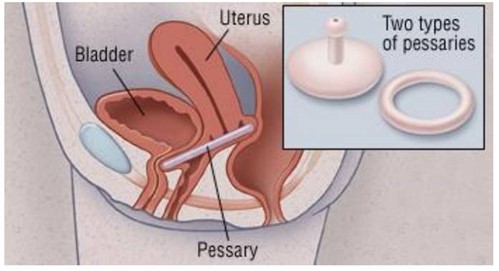
A pessary is a soft silicone support device placed in the vagina — like an internal brace.
I often recommend it when:
- Women want to avoid surgery
- They are planning future pregnancy
- They have medical conditions making surgery risky
- They want temporary relief
It provides immediate symptom support and is a very effective non-surgical option.
Pessary and Sexual Intimacy – Can They Co-Exist?
Yes, and this is a very important question.
- Some pessaries are removed before intercourse
- Certain ring pessaries can stay during intimacy
- Correct size and fitting make a big difference
With proper guidance, most couples continue a comfortable intimate life.
Impact of Pelvic Organ Prolapse on Sexual Intimacy
Prolapse may affect confidence more than physical ability. Women may experience:
- Discomfort
- Vaginal dryness
- Fear or embarrassment
- Reduced confidence
I always reassure my patients — once we address the prolapse, intimacy often improves significantly.
Ring Pessary for Prolapse and Sex
The ring pessary is the most commonly used type because:
- It is comfortable
- Easy to insert and remove
- Suitable for mild to moderate prolapse
- Often compatible with sexual activity
- Allows day-to-day normal living
Regular follow-up ensures hygiene and long-term comfort.
When Should You See a Specialist?
- I advise consultation if you notice:
- Vaginal bulge or heaviness
- Urinary leakage or difficulty passing urine
- Pain or discomfort during intimacy
- Backache with pelvic pressure
Early evaluation means more conservative options, quicker relief, and better outcomes.
My Final Reassurance to You
Uterine prolapse is not life-threatening, but it can affect comfort, confidence, and quality of life. The encouraging news is that today we have excellent non-surgical and minimally invasive surgical options, tailored individually.
You do not have to silently tolerate discomfort or embarrassment.
If you are experiencing symptoms — or even if you are unsure — a simple pelvic health assessment can provide clarity and reassurance.
Your pelvic health is important. With the right guidance, most women return to a completely comfortable and confident life.

Dr. Alphy S Puthiyidom
MBBS, MD(Obs&Gn),FMIS(Laparoscopy)
Head of the Department Obstetrics & Gynecology
Advanced Gynecological Laparoscopic Surgeon
& Pelvic Reconstructive Surgeon
MEDICLINIC WELCARE HOSPITAL
Al Garhoud, Dubai
MEDICLINIC PARKVIEW HOSPITAL
Umm Sequim, Al Barsha South 3, Dubai
Appointments 800-1999